





Sustainability

“I am more confident in solving a problem in a much more in-depth manner.”


Sembawang Secondary School

“I see myself growing more in creativity and innovation after this experience.”
Pei Hwa Secondary School
“I like that the instructors are engaging”
Pei Hwa Secondary School


Learning Outcomes

Step Out
of Comfort
Zones
Learners investigate real sustainability issues in school such as litter, food waste or energy use, and take on the challenge of changing habits and systems, not just talking about them.

Transformative
Learning
Students go beyond textbooks to study canteens, classrooms, toilets and corridors, seeing how their actions affect cleanliness, waste and the wider environment.

Foster Empathy
Learners listen to classmates, cleaners, canteen vendors, and teachers to understand different perspectives and build empathy. Then, they will apply a clear design thinking process from empathise to test to develop structured, creative solutions for real sustainability challenges.

Understand Diverse Perspectives
Working in mixed teams and with various stakeholders, learners see that sustainable change requires buy-in from many groups, from students to staff and vendors.

Ignite
Curiosity
They are encouraged to question “why we do things this way”, explore “what if” scenarios, and experiment with new ideas for reducing waste and conserving resources.

Develop
New Skills
Learners develop their ideas into tangible proposals and prototypes, enhancing their practical skills to make their school and community more sustainable.
Sustainability in Numbers

Felt confident experimenting with new ideas, rising from ~69%
Found teamwork easier and more effective, up from ~58%
Learners agreed they could better empathise with others’ challenges, rising from 59% before the programme.
Growing Future-Ready Learners with EDIT Design Thinking®
By applying our proprietary EDIT Design Thinking® to everyday life, your students investigate how habits, systems and environments contribute to waste, energy use and overall environmental impact. With our proprietary tools, they gather insights from multiple stakeholders, frame focused sustainability challenges, and ideate, prototype and test solutions that are both practical and behaviour-changing.

Empathise
Understand the experience of the learners by using method-like observation, interaction, and immersing your students in the experiences.
Define
Analyse the observations and synthesise them in order to define the core problems and create a clear value proposition statement.
Ideate
Process your learners’ findings and generate a large quantity of possible solutions by stepping beyond the obvious and exploring diverse ideas by prototyping.
Test
Use observations and feedback to refine the prototypes, learn more about the use, and refine your learners’ original point of view.
Programme Package Outline
Our Sustainability programme is a learning journey that helps students investigate real sustainability challenges (e.g., waste, energy, water use and cleanliness) and turn insights into practical, testable solutions. Guided by our EDIT Design Thinking®, learners build systems thinking, stewardship and collaborative problem-solving while aligning with Singapore’s longer-term direction towards a greener, more resilient city and economy, and the growing need for future-ready skills as job requirements evolve.

Learn from real sustainability champions
Students go on a thematic learning journey to observe how waste, hygiene, energy or resource systems are managed in real settings. They engage stakeholders, identify practical enablers and gaps, and gather ideas that can be adapted to strengthen sustainability habits in school.
Introduction to Design Thinking for sustainability
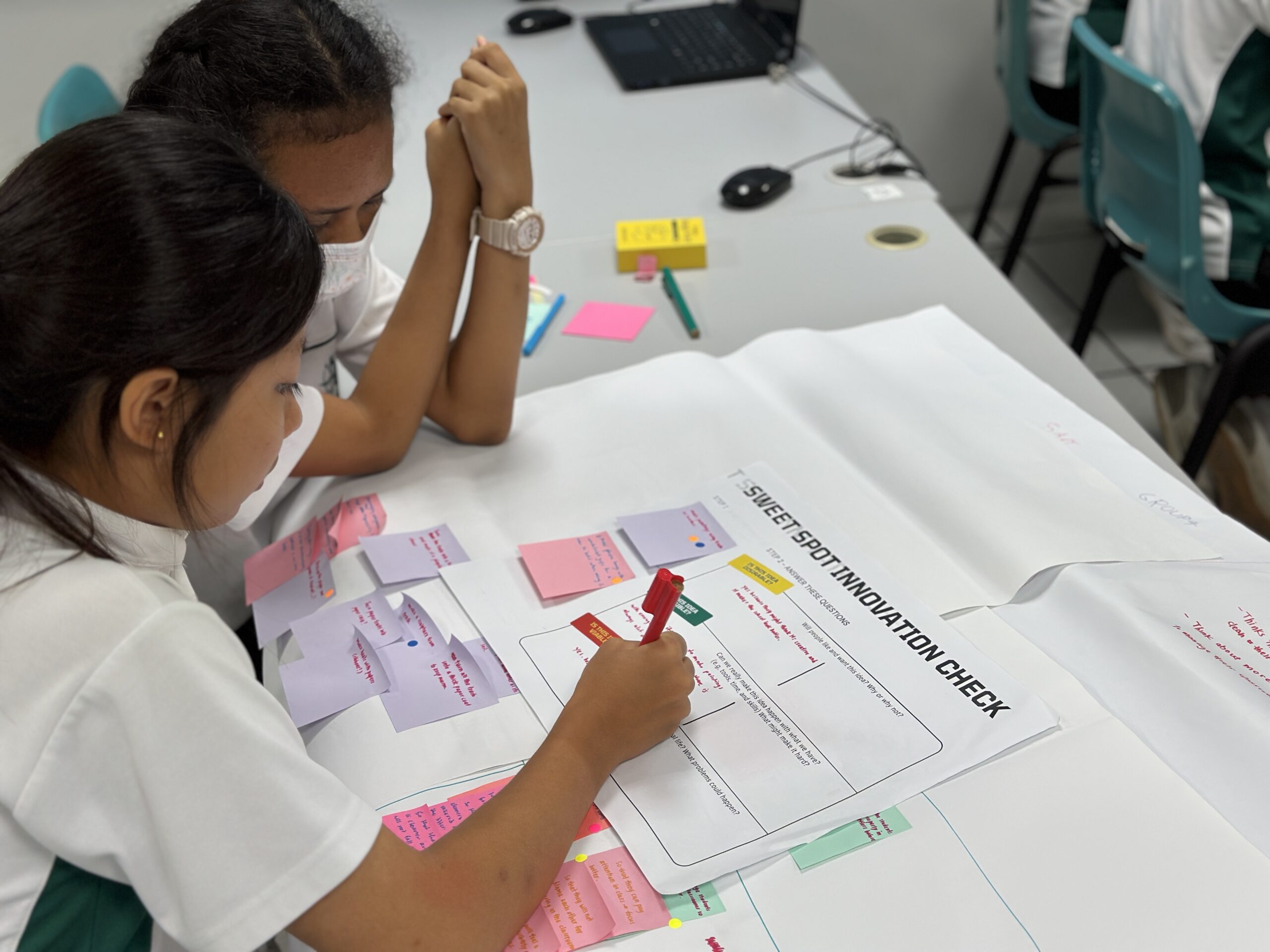
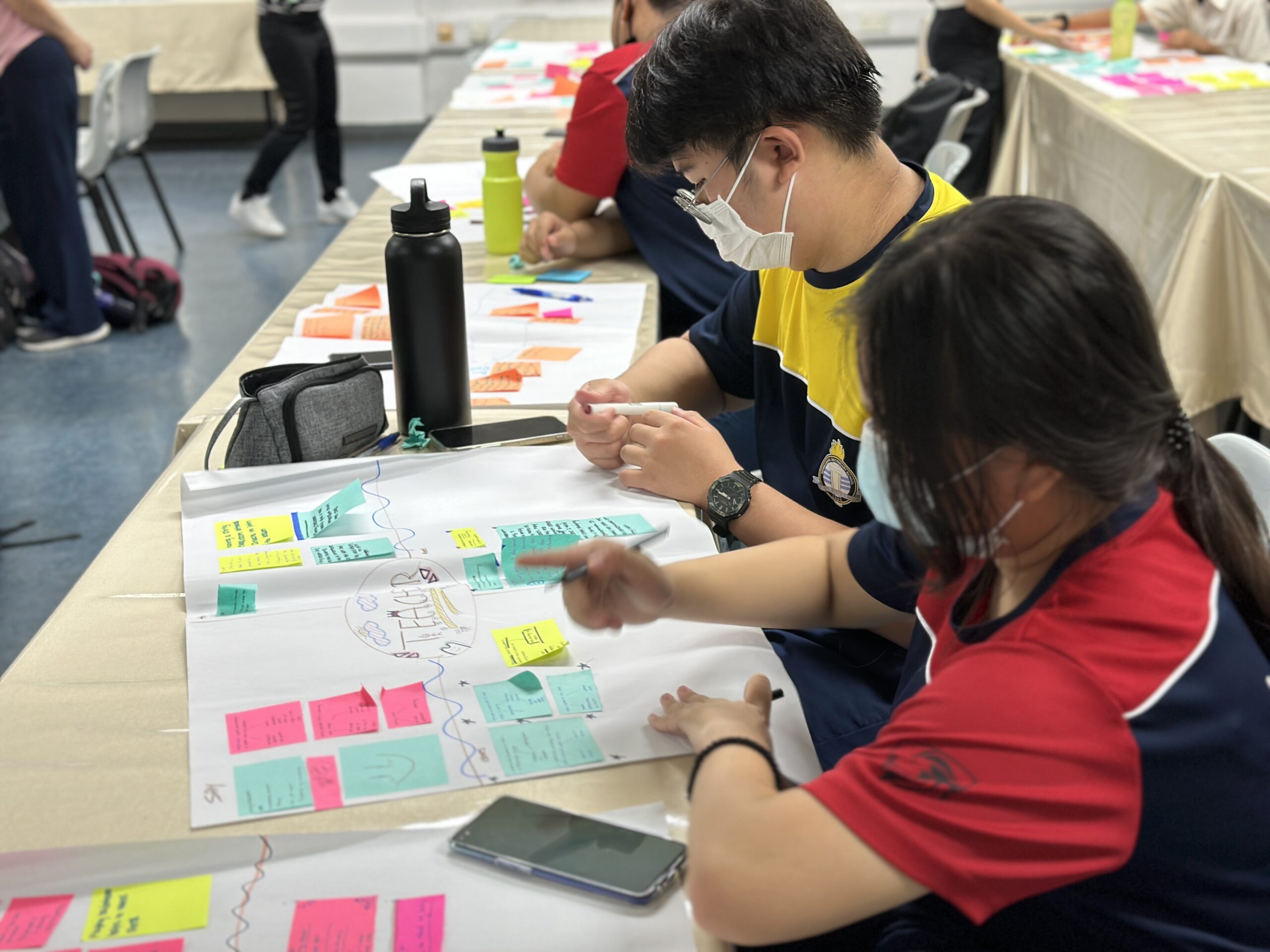
Students will be introduced to EDIT Design Thinking® through structured, hands-on activities. They learn the stages from empathise to test, map users and systems related to school sustainability, and frame focused “How might we…” questions to guide early solution concepts.

Understand their own school’s footprint
Back on campus, students map key areas (canteen, classrooms, toilets, corridors), identify pain points around cleanliness, waste, water and electricity, and capture insights in empathy maps. They then craft focused “How might we…” questions for their chosen challenge.

Design better sustainable habits and systems
Using divergent and convergent ideation tools, the team generates numerous ideas ranging from new routines and signage to bin systems and campaigns, clusters and evaluates them, and selects a few strong concepts to develop as collaborative projects.
Prototype and test their ideas
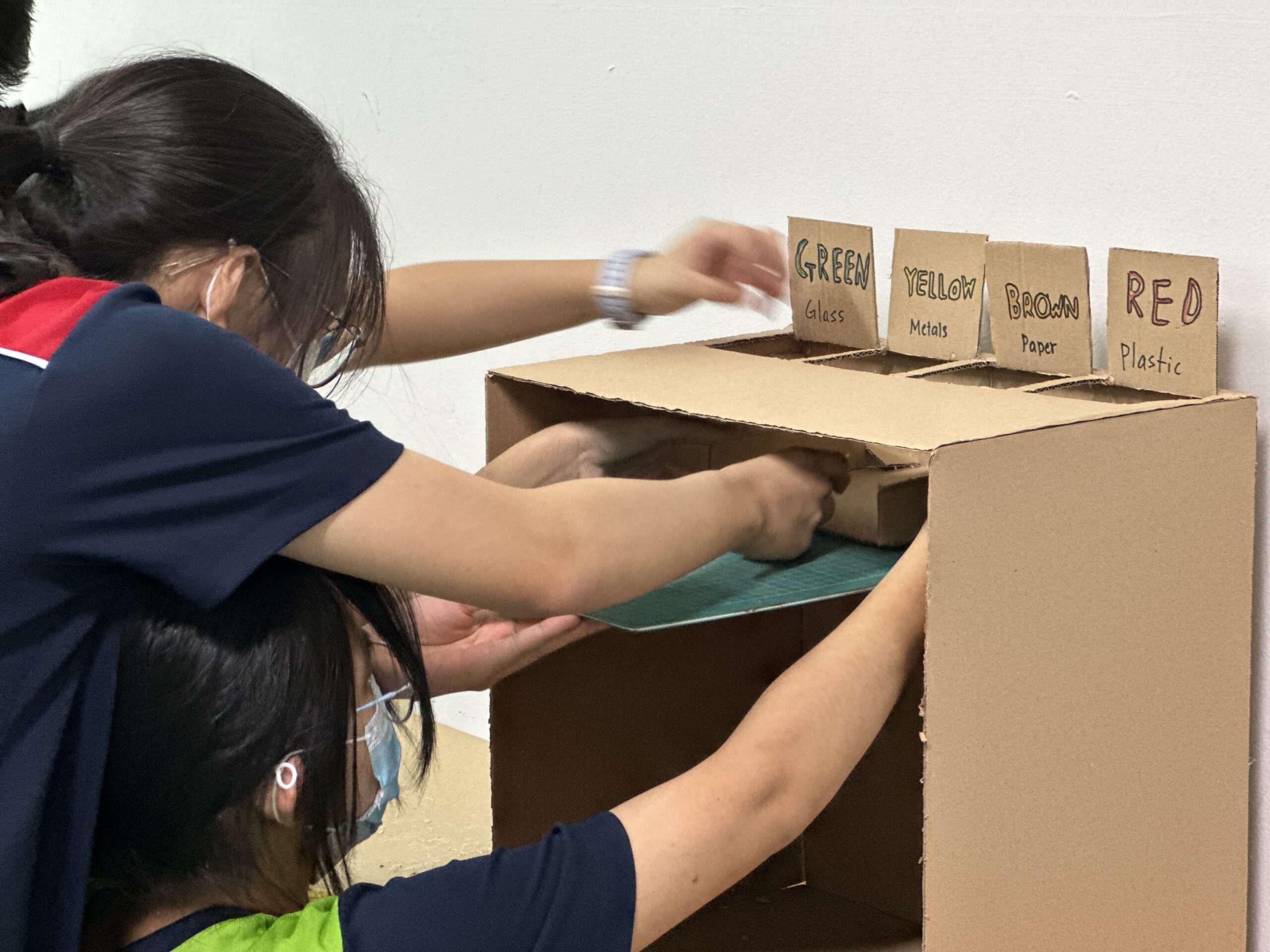
Teams turn concepts into quick prototypes such as posters, mock bin layouts, duty rosters, comms campaigns or small pilots. They test these with peers and teachers, gather feedback and refine their solutions.

Present to the school community
Students share their final concepts and design journey with school leaders, teachers and classmates, as they have to explain the environmental issues they tackled, what they learnt from users, and how their ideas could be implemented or piloted.
 All programme formats can be customised to your school’s context, student level and timetable.
 Featured Past Programmes
Lorem ipsum dolor sit amet, consectetur adipiscing elit, sed do eiusmod tempor incididunt ut labore et dolore magna aliqua. Uten enim ad minim veniam, quis nostrud exercitation ullamco laboris.Lorem ipsum dolor sit amet, consectetur adipiscing elit
Pei Hwa Secondary School – Designing a Cleaner, Greener Campus
At Pei Hwa Secondary School, students used design thinking to tackle issues such as littering, food waste, recycling and hygiene across canteens, classrooms and toilets. Through framing and scope sessions, vision boards and design goals, they proposed solutions like clearer bin systems, composting ideas, reminders on digital boards and class routines that build ownership of shared spaces.
The programme significantly increased students’ understanding of design thinking (from 48% to 78%) and boosted their collaborative and creative confidence by 24%.
Sembawang Secondary School – Building Creative Confidence for Real-World Problems
At Sembawang Secondary School, Let Out Your Creativity introduced students to design thinking through a mix of design studio and thematic learning journeys. Working in diverse groups, they applied tools such as empathy mapping and idea dice to tackle real-world issues and propose solutions that improve their school and wider community.
Students’ understanding of design thinking jumped from 13.5% to 69.5%, and many reported feeling more confident in solving difficult problems and working with others, which are among the key foundations for long-term sustainability efforts.
- 43 design thinking ideas
- 24 physical prototypes ideas
What Makes Us Different
Led by practising consultants and built on proven frameworks, our programmes are co-designed with educators and enriched by real-world partners, ensuring strong alignment with school priorities and competencies of today and tomorrow.
Industry-Proven Experts & Methodology
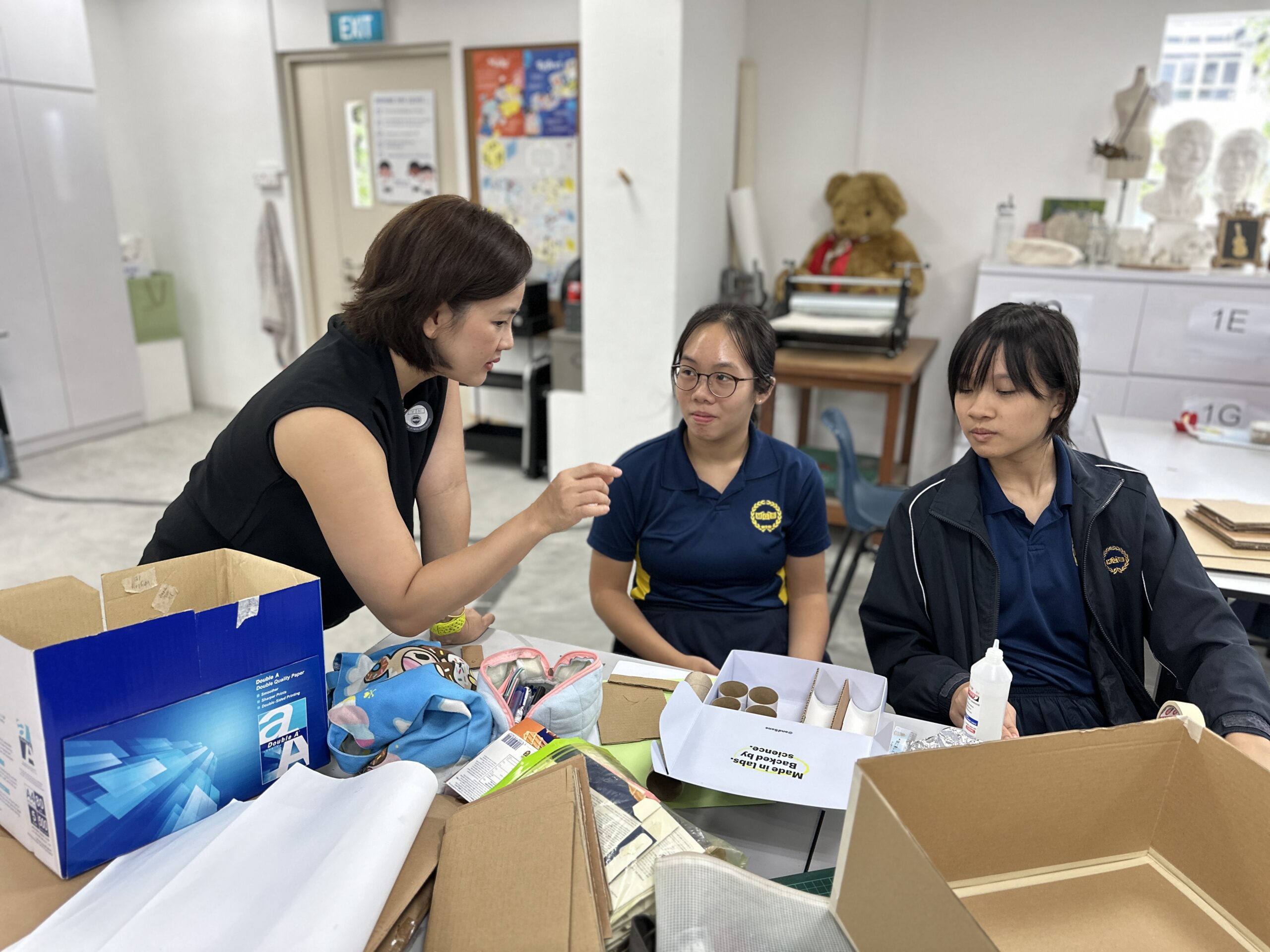
C-Academy is led by practising brand and design consultants who bring real industry rigour into education. Our programmes are grounded in Creativeans’ EDIT Design Thinking® and BrandBuilder® frameworks, refined through real projects since 2012 to help organisations solve complex challenges with clarity and creativity.

Co-Designed
with Educators
For Real Impact
We plan and facilitate workshops alongside teachers, aligning with school priorities, character and citizenship education, and 21st-century competencies. Every session is grounded in your context and leaves behind tools you can continue using after the programme ends.
Strong Network
of Partners
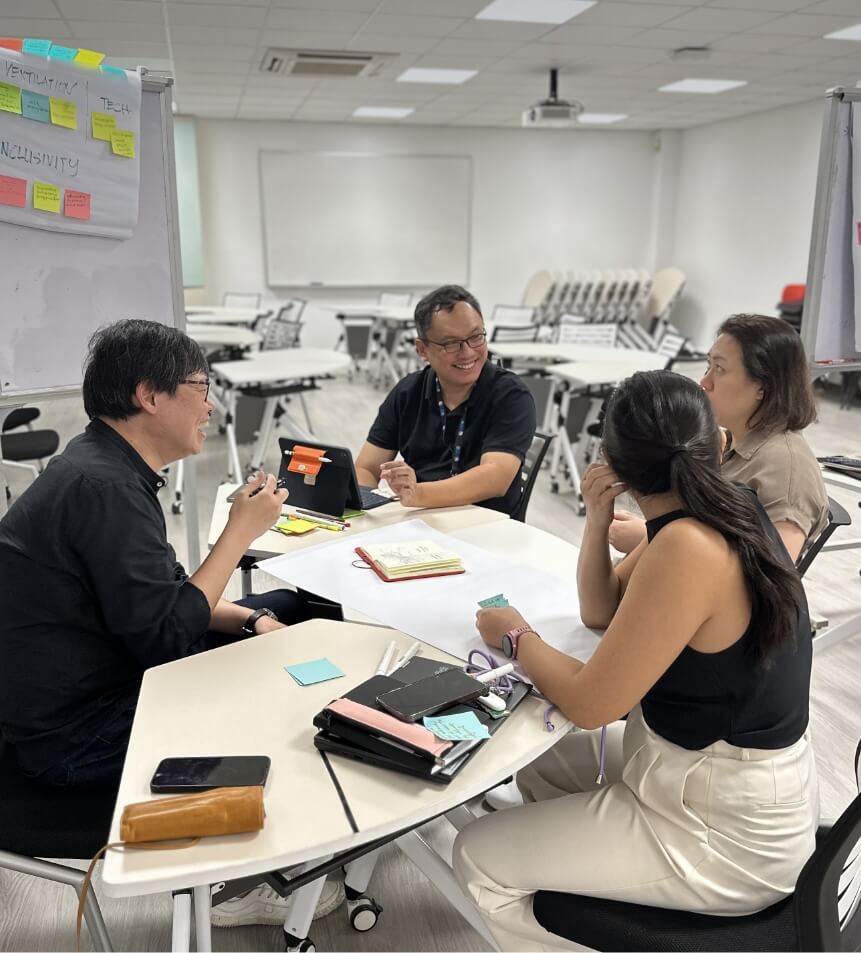
We collaborate with a strong network of partners from industry foundations to cultural and community organisations to enrich participants’ learning and connect design thinking directly to real-world applications. This ensures students engage with authentic perspectives and understand how design thinking creates value in real contexts.
Ready to grow a greener school community?
Share your sustainability goals with us, and we’ll help you design a Let Out Your Creativity – Sustainability programme that fits your learners and timetable.